Category: Uncategorized
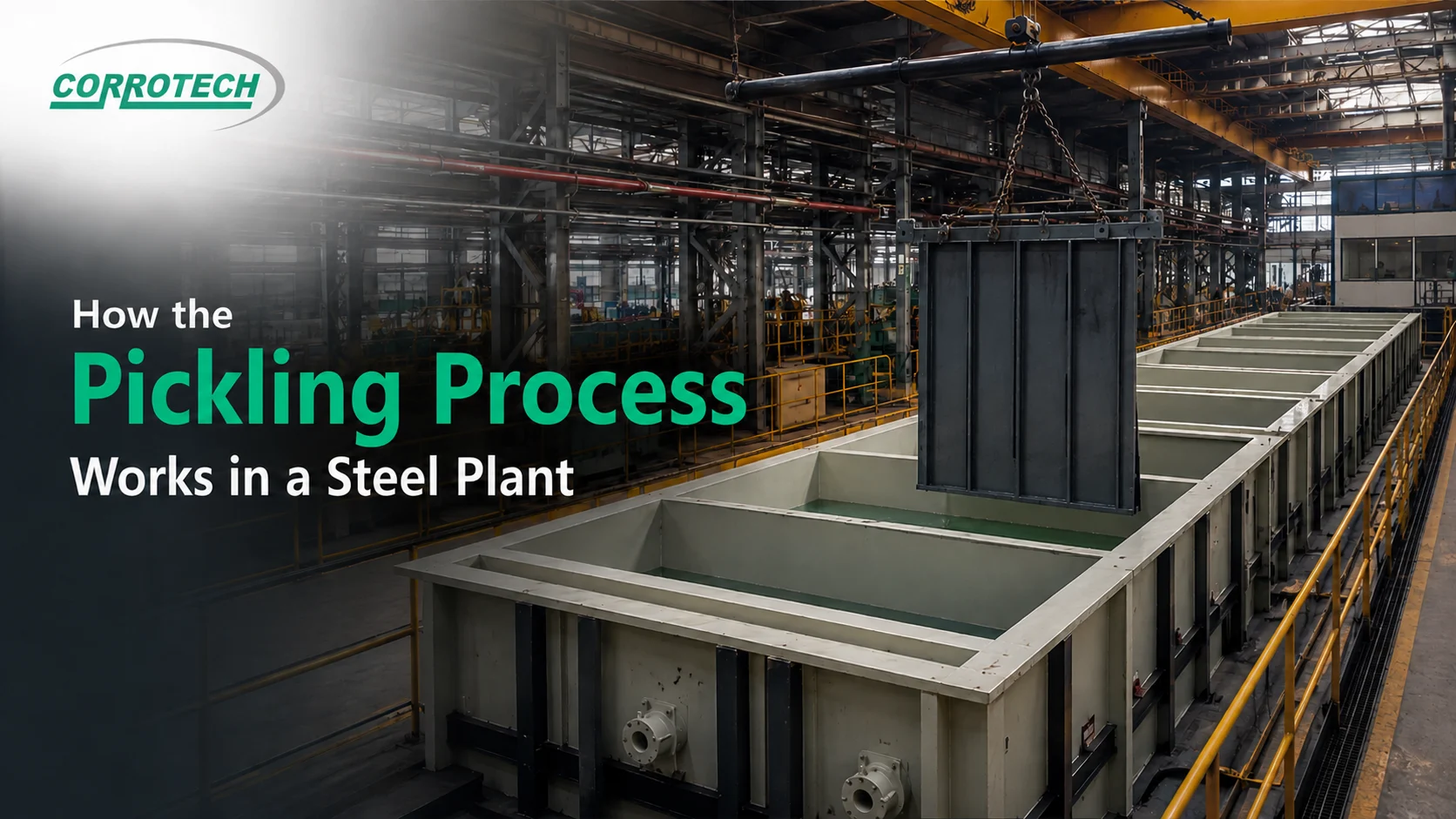
If you’ve spent any time around a steel mill, you already know steel doesn’t roll out of a furnace looking finished. Hot-rolled and cold-rolled coils come out carrying a layer of scale, rust, and oxide on the surface, and that layer needs to be stripped off before the steel can be welded, coated, galvanized, or shaped into anything usable. This is where the pickling tank plays a crucial role in steel plant operations, making the pickling process effective and reliable
For engineers and plant managers, pickling isn’t just some cleaning step squeezed in between rolling and finishing. It has a direct bearing on surface quality, how smoothly the steel moves through downstream processing, and whether a mill can consistently hit customer specs. In this article, we’ll break down what pickling actually does, how it’s carried out on the floor, and which controls really matter.
What Is Pickling Process, and Why Does Steel Need It
So, what is pickling process in plain terms? It’s a chemical treatment that strips iron oxide scale, rust, and other surface contaminants off steel using an acid bath. This scale builds up naturally when hot steel reacts with oxygen while it’s being rolled and cooled. If it’s left on, it messes with coating adhesion, creates an uneven finish, and often leads to defects further down the line during galvanizing or cold rolling.
Think of it a bit like prepping a wall before you paint it. You wouldn’t paint over flaking plaster and expect a good result. Steel works the same way – any coating, plating, or forming step done over scale just won’t bond properly, or it’ll trap contaminants right under the surface.
The pickling process in steel industry operations has stuck around for decades simply because mechanical cleaning alone – think shot blasting – usually can’t get the surface clean enough for precision work. Acid pickling gets into surface irregularities that mechanical methods just can’t reach.
How the Pickling Process Works in a Steel Plant
The steel pickling process generally moves through a set sequence of stages – each one built to prep the coil for the acid bath, treat the surface, and then protect it before it heads to the next stage of production.
1. Pre-Cleaning and Degreasing
Before the acid even touches the steel, the coil goes through degreasing. Oils, lubricants, and leftover residue from rolling get cleaned off using alkaline cleaners or hot water sprays. Skip this step, and the acid bath simply won’t work as well – you’ll end up with patchy, inconsistent scale removal.
2. Acid Bath Treatment
This is really the heart of the pickling treatment for steel. The coil runs through a series of tanks filled with acid solution – usually hydrochloric acid for carbon steel, or a nitric-hydrofluoric acid mix for stainless steel. The acid breaks down the oxide layer through a controlled reaction, lifting the scale off without harming the steel underneath.
Most plants run a continuous pickling line, where the coil unwinds and passes through multiple acid tanks one after another. Each tank chips away at progressively finer scale, so by the time the coil comes out the other end, the surface is clean and even.
3. Rinsing
Once the acid has finished its job, the steel needs a thorough rinse to wash off any leftover acid and dissolved iron salts. This usually happens across several stages with fresh water, often set up in a counter-flow arrangement so the plant saves water while still getting a neutral surface.
4. Drying and Surface Protection
After rinsing, the coil gets dried and, in a lot of cases, gets a temporary oil film or passivation layer to stop flash rust from setting in before it reaches the next stage.
Temperature Control During Steel Pickling
Temperature control during steel pickling is far from a minor detail – it’s one of the variables that really decides how well the whole process performs. Acid gets more reactive as temperature rises, so most plants keep their pickling baths within a defined range depending on the acid type in use. Hydrochloric acid baths for carbon steel typically run between 60°C and 90°C, while sulfuric acid baths sometimes run hotter, up to around 100°C, since sulfuric acid needs more heat to work effectively. Stainless steel lines using nitric-hydrofluoric acid mixes tend to stay closer to the lower end of that range, since these acids are more aggressive to begin with.
Run the bath too cold, and scale removal slows right down, leaving you with under-pickled surfaces that still hold onto residual oxide. Run it too hot, and the acid starts eating into the base metal itself – a problem known as over-pickling – which roughens the surface and burns through acid needlessly. Most continuous lines rely on automated temperature monitoring and heating systems to hold that tight window, since even small swings in temperature can throw off line speed and quality.
Time Duration for Pickling Steel
The time duration for pickling steel comes down to a handful of factors – scale thickness, acid concentration, bath temperature, and the steel grade in question. On a continuous pickling line, any given section of coil might only be exposed for a few minutes at a time, since it’s constantly moving through the tanks. In batch pickling setups, though, a coil or a set of parts might sit soaking in the acid bath anywhere from 15 to 45 minutes.
Thicker scale from hot rolling generally calls for longer exposure or a stronger acid concentration compared to lighter surface oxidation. Plants running a mix of steel grades often tweak dwell time and concentration batch by batch rather than sticking to one fixed setting across the board.
Common Pickling Techniques in Steel Manufacturing
Different mills lean on different pickling techniques in steel manufacturing depending on what they’re producing, how much throughput they need, and the steel grade involved.
Continuous pickling lines (CPL) are the go-to for high-volume hot-rolled coil processing. The coil keeps moving through the acid tanks without stopping, which makes this the efficient choice for large-scale carbon steel production.
Push-pull pickling lines run more like a batch process, and they tend to suit mills with lower volumes or a wider variety of product specs.
Electrolytic pickling brings an electric current into the mix to speed up the acid reaction, and it’s often used for stainless steel, where plain acid pickling alone would either take too long or need overly aggressive acid strength.
Each of these is really its own steel pickling method suited to a particular kind of production, and picking the right one usually comes down to volume, steel grade, and what infrastructure the plant already has in place.
Pickling as Part of Broader Metal Treatment Processes
Pickling doesn’t happen in a vacuum. It’s one piece of a much larger set of metal treatment processes that get steel ready for whatever it’s eventually used for. In a lot of plants, pickling lines feed straight into downstream operations like cold rolling, annealing, or galvanizing – so the surface quality coming out of pickling directly shapes how well those next steps go.
That’s exactly why pickling line design, chemical dosing, and rinsing efficiency get so much attention from process engineers. A weak link at the pickling stage tends to surface later on – as coating defects, adhesion failures, or coils getting rejected outright.
Common Mistakes to Avoid in Pickling Operations
A handful of recurring issues tend to trip up pickling line performance:
- Inconsistent acid concentration: letting acid strength drift without regular titration checks leads to scale removal that’s all over the place.
- Poor rinsing: skimping on rinsing leaves acid residue behind, which shows up later as surface staining or corrosion.
- Ignoring bath temperature drift: small temperature swings add up over a shift and start affecting output quality.
- Delayed acid regeneration or disposal: spent acid that doesn’t get managed properly weakens bath performance and can create environmental compliance headaches.
Most of these come down to staying on top of monitoring and keeping the pickling line’s chemical and mechanical systems on a regular maintenance schedule.
Why Getting Pickling Right Matters for Steel Plant Output
A well-run pickling process in steel plant operations lays the groundwork for everything that comes after – coating quality, forming consistency, and how the final product looks and performs. Plants that treat pickling as a precision process rather than just routine cleaning tend to see fewer rejections down the line and much steadier output across production runs.
Frequently Asked Questions
1. What acid is used for pickling steel?
For carbon steel, hydrochloric acid is the most common choice, since it works fast and doesn’t attack the base metal too aggressively. Stainless steel usually needs a stronger mix of nitric and hydrofluoric acid because its chromium content makes the oxide layer tougher to remove.
2. What is the difference between pickling and passivation?
Pickling removes scale, rust, and heat tint using a fairly aggressive acid treatment, and it does eat into a thin layer of the base metal. Passivation comes after pickling and uses a much milder acid to build up a protective chromium-oxide layer on the surface – it doesn’t strip material, it protects it. In short, pickling cleans, passivation protects.
3. How long does the pickling process take for steel?
It depends on the setup. On a continuous pickling line, a section of coil is only in contact with the acid for a few minutes at a time since the line keeps moving. In batch pickling, a coil might sit in the acid bath anywhere from 15 to 45 minutes, depending on scale thickness and acid strength.
4. What happens if steel is over-pickled or under-pickled?
Under-pickled steel still has traces of oxide left on the surface, which shows up later as coating or adhesion problems. Over-pickled steel has been left in the acid too long or at too high a temperature, so the acid starts attacking the base metal itself, leaving a rough, uneven surface and wasting acid in the process.
5. What is electrolytic pickling, and when is it used?
Electrolytic pickling uses an electric current to speed up the acid reaction. It’s mainly used for stainless steel, where standard acid pickling alone would either take too long or need acid concentrations aggressive enough to risk damaging the surface.
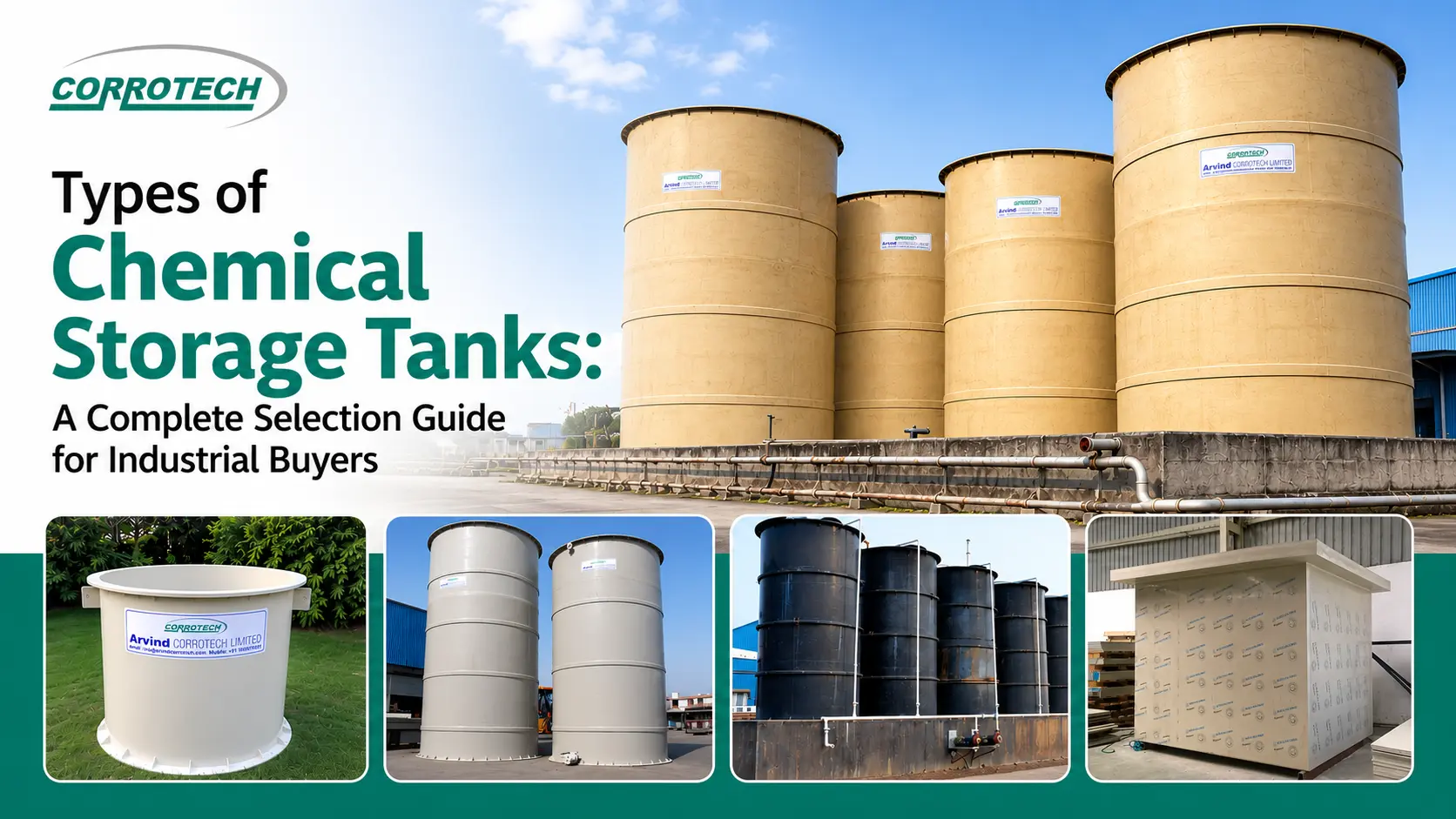
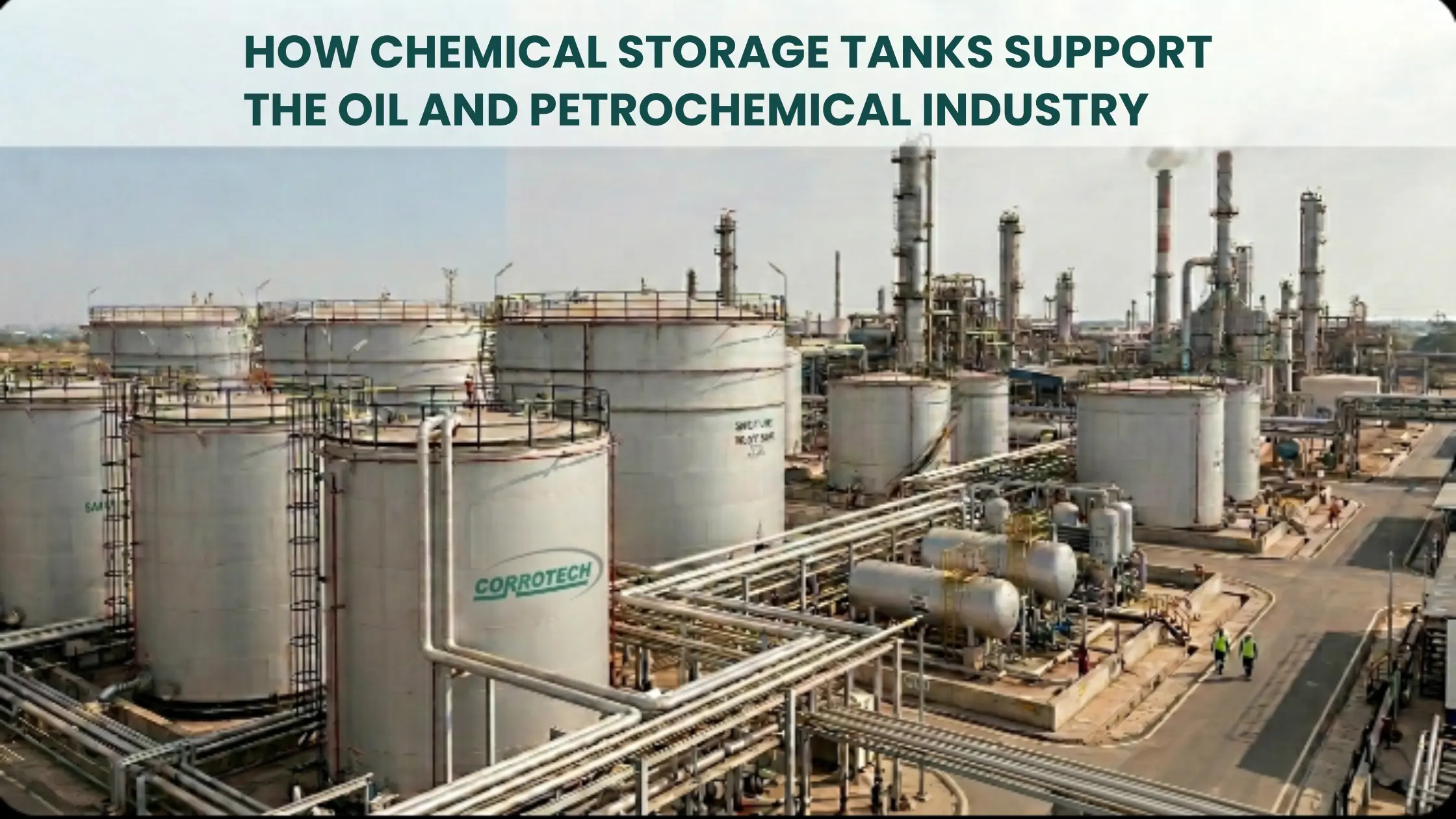
Selecting the wrong chemical storage tank can result in leaks, chemical contamination, equipment failure, and significant safety hazards on the plant floor. Chemical storage tanks are deployed across diverse industries, including water treatment, electroplating, pharmaceuticals, fertilizers, and surface finishing. Tank selection is application-specific and depends on the chemical being stored, its operating temperature, required storage volume, and the installation environment. This guide outlines the types of chemical storage tanks classified by material, design, and application, enabling industrial buyers to select the right tank for their facility with confidence.
Types of Chemical Storage Tanks by Material
The material of a chemical storage tank is the most critical factor. It determines how well the tank resists the chemical being stored, how long it lasts, and what temperatures it can handle.
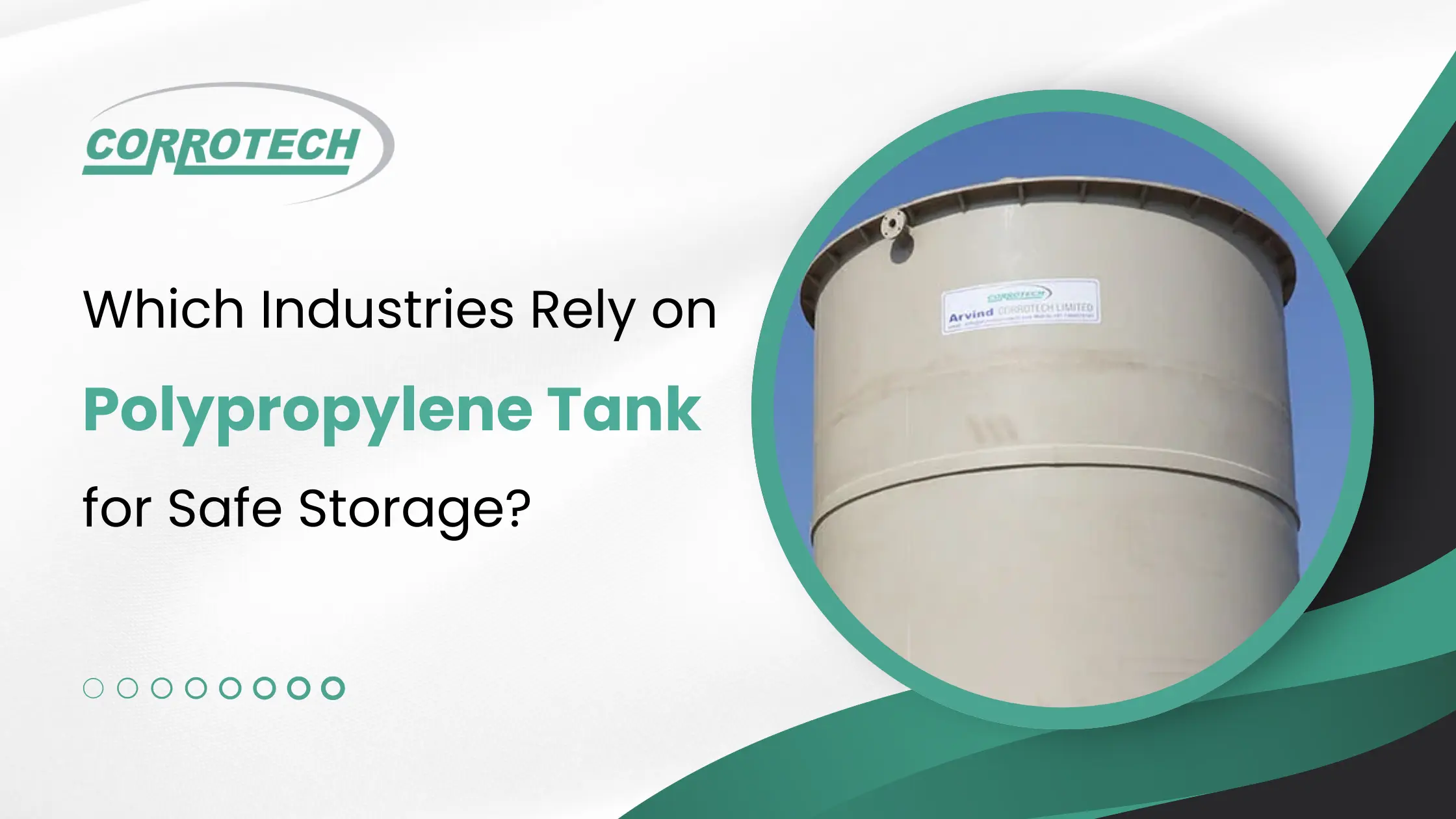
1. Polypropylene (PP) Tanks
PP tanks are one of the most widely used options for storing corrosive chemicals in industrial settings. They are fabricated from polypropylene sheets – available in Homopolymer (HP-PP) and Copolymer (CP-PP) grades – and offer excellent resistance to a broad range of acids, alkalis, and solvents.
What makes PP tanks reliable is the welding quality. When fabricated using Butt Fusion technology, the joints become virtually seamless, making the tank a near single-piece unit with no weak points for leakage.
PP tanks can handle operating temperatures up to 100°C, which makes them suitable for a wide range of industrial chemical storage needs. They are commonly used for inside-shed installations. For outdoor use, UV-stabilized grades of PP are available.
PP offers broad chemical resistance across most acids and alkalis (general pH 0–14 range), though it is not suitable for strong oxidizing acids like concentrated nitric acid or certain aggressive solvents. Chemical compatibility should always be verified against a resistance chart before final selection.
Best suited for: Pickling plants, electroplating, surface treatment, water treatment chemical storage.
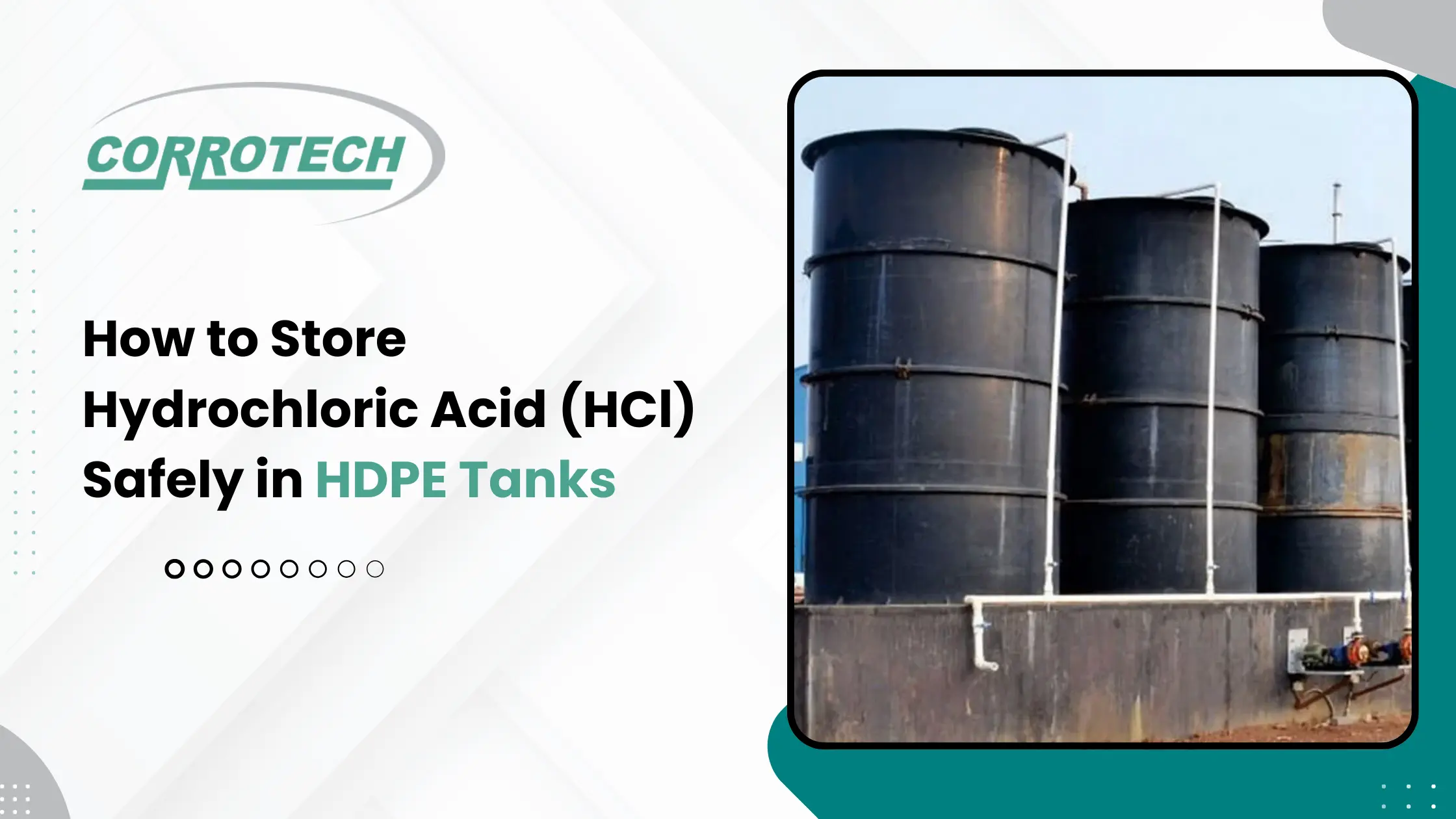
2. HDPE (High-Density Polyethylene) Tanks
HDPE tanks are fabricated from high-quality polyethylene and are known for being lightweight, durable, and low-maintenance.
HDPE tanks offer good weathering resistance and, when fabricated with UV-stabilized grade (typically with a carbon black additive), are well-suited for outdoor or open-air installations. Natural (non-stabilized) HDPE is prone to UV degradation over time, so UV stabilization is recommended for any sustained outdoor use.
HDPE tanks are non-corrosive and offer good chemical compatibility with a wide variety of acids, alkalis, and industrial chemicals. For continuous industrial use, HDPE tanks are typically rated for operating temperatures up to 60°C. They are available in both horizontal and vertical configurations.
Best suited for: Outdoor chemical storage, fertilizer plants, ETP chemical handling, water treatment facilities.
3. PVDF + FRP (Polypropylene + Fiberglass Reinforced Plastic) Tanks
PP+FRP tanks are a composite design that combines the chemical resistance of polypropylene with the structural strength of fiberglass reinforced plastic. The inner PVDF layer handles chemical contact while the outer FRP shell provides mechanical support and rigidity.
PVDF+FRP tanks can handle operating temperatures up to 100°C and it can withstand highly acidic chemical.. This combination makes them particularly effective in high-temperature environments where a plain PP or HDPE tank may not provide enough structural integrity. They can withstand strong acids and aggressive solvents, and offer a longer operational life in demanding environments.
Best suited for: High-temperature acid storage, aggressive chemical environments,sulfuric and nitric acid storage tanks.
Types of Chemical Storage Tanks by Design and Shape
Beyond material, the physical design of a tank affects how it integrates into your facility, how efficiently it drains, and how well it uses available space.
Vertical Tanks
Vertical tanks have a smaller footprint and are the most common choice for high-capacity storage. They are available in multiple configurations:
- Flat top, flat bottom – Easy to install on flat surfaces; commonly fitted with level indicators and manholes at the top.
- Flat top, conical bottom – The conical base allows complete and easy drainage of the chemical; particularly useful where full tank emptying is required regularly.
- Conical top, flat bottom – Provides added structural strength to the tank design.
- Open top – Used where access for mixing, cleaning, or process operations is needed. The shell is fabricated from PP or HDPE sheets with a welded bottom plate.
- Close top – Sealed tanks designed for leak-proof and spill-proof storage of liquid chemicals; used for both storage and chemical process applications.
Horizontal Tanks
Horizontal tanks are used where height restrictions exist or where the tank needs to be integrated along the structural steel of a plant or building. They can be fabricated using PP+FRP, PVDF+FRP, FRP, and other corrosion-resistant plastic materials. They are also commonly used for transport applications.
Square Storage Tanks
Square tanks are self-standing, easy to install, and space-efficient for indoor facilities with limited floor area. They are leak-proof, anti-corrosive, and abrasion-resistant – making them a practical choice for storing aggressive solvents and chemical fluids where a rectangular footprint fits better than a cylindrical design.
Types of Chemical Storage Tanks by Application
Sometimes the easiest way to select the right tank is to start with the chemical or process – not the material. Here is how common industrial applications map to tank types:
| Application | Recommended Tank Type | Common Industries |
| Acid storage (HCl, H2SO4) | PP, HDPE, PVDF+FRP | Galvanizing, electroplating, pickling |
| Alkali / caustic storage (NaOH) | HDPE, PP | Water treatment, surface finishing |
| Solvent storage | SS 316, Carbon Steel (lined) | Pharma, paint, chemical processing |
| Effluent / wastewater storage | HDPE, PP | ETP/STP plants, manufacturing units |
| Water treatment chemicals | HDPE | Municipal water, industrial water plants |
| Fertilizer chemicals | HDPE | Agriculture, fertilizer manufacturing |
How to Choose the Right Chemical Storage Tank
If you are evaluating options, these four questions will help narrow down the right choice:
- What chemical will be stored? This is the most important factor. The tank material must be chemically compatible with what it holds. Hydrochloric acid, for example, requires PP, HDPE, not stainless steel.
- What is the operating temperature? HDPE tanks are typically rated for continuous use up to 60°C. PP and PP+FRP tanks handle up to 100°C. For higher temperatures, consult the tank manufacturer for the correct grade and design.
- Where will the tank be installed – indoors or outdoors? For outdoor use, UV-resistant HDPE or UV-stabilized PP is required. For indoor applications, standard PP tanks work well.
- What capacity is needed? Tanks for industrial applications typically range from 1 KL to 100 KL and beyond. Vertical tanks maximize storage in limited floor area; horizontal tanks suit space-constrained or transport applications.
Frequently Asked Questions
What is the most common material used for chemical storage tanks?
Polypropylene (PP) and HDPE are the most widely used materials for industrial chemical storage because they offer broad chemical resistance, durability, and cost-effectiveness.
Can stainless steel tanks be used for acid storage?
Stainless steel tanks should not be used for storing hydrochloric acid (HCl). HCl destroys the passive layer on stainless steel, causing pitting and stress corrosion cracking. PP, HDPE, or PP+FRP tanks are the appropriate choice for acid storage.
What is the difference between PP and PP+FRP tanks?
A PP tank is made entirely from polypropylene. A PP+FRP tank has an inner PP layer for chemical resistance and an outer FRP shell for added structural strength.
What is the temperature limit of PP chemical storage tanks?
PP tanks can handle operating temperatures up to 100°C, making them suitable for most industrial chemical storage applications. For extremely high-temperature requirements, PP+FRP or stainless steel should be evaluated.
Which type of chemical storage tank is best for outdoor installation?
HDPE tanks with UV-stabilized grade are the most common recommendation for outdoor installations. UV-stabilized polypropylene tanks are also suitable depending on the chemical being stored.
Selecting the right chemical storage tank requires matching the right material, design, and capacity to your specific application. If you are unsure which tank type suits your requirement, consulting with a specialist manufacturer can help avoid costly mistakes and ensure long-term performance.
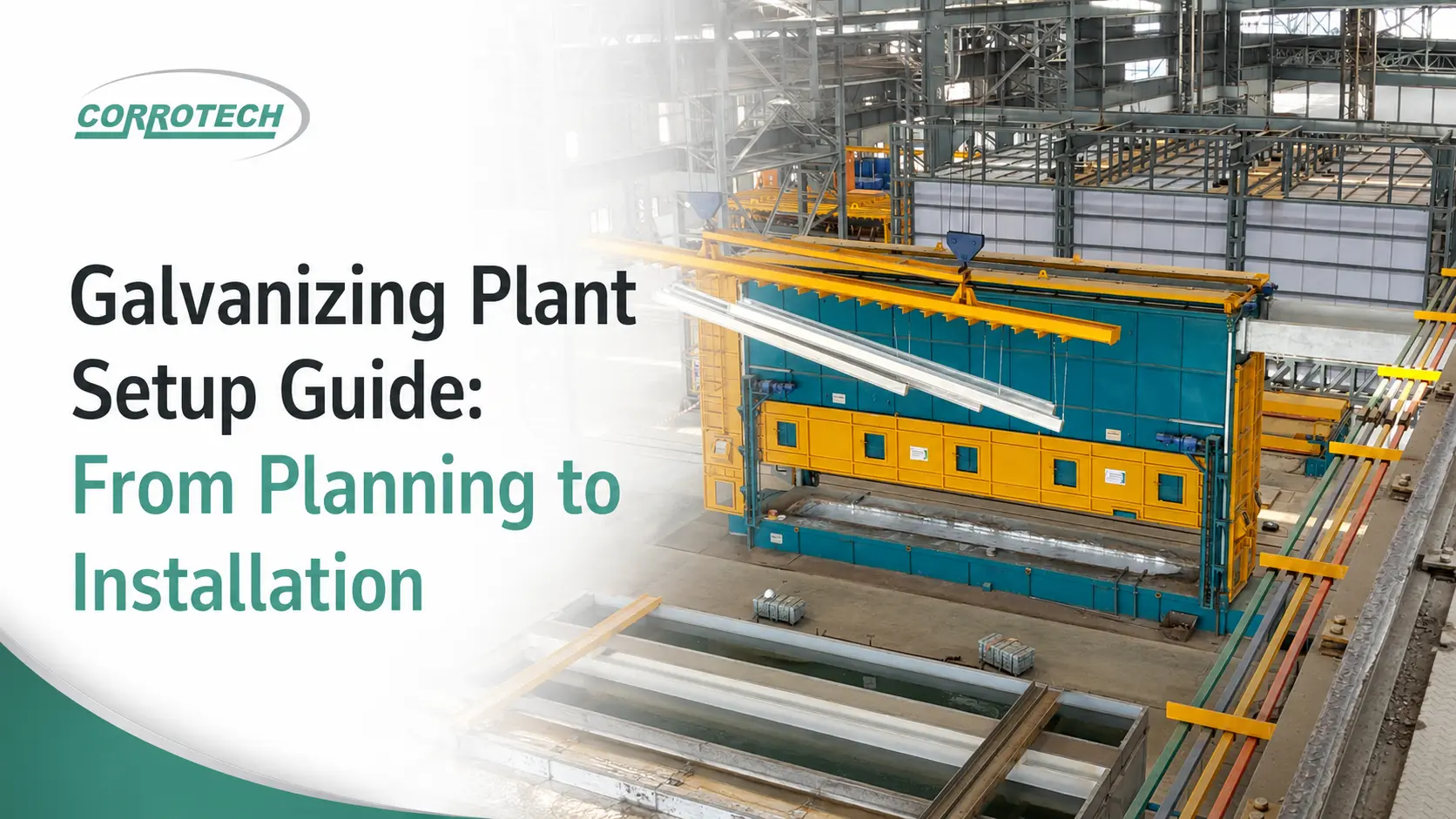
Setting up a galvanizing plant is a significant capital investment. Done right, it positions your business to serve a growing demand for corrosion-protected steel across construction, infrastructure, automotive, and utility sectors. Done poorly, it leads to costly rework, regulatory issues, and underperforming operations.
This guide is written for industrial manufacturers, project engineers, and business owners who are either planning a new galvanizing facility or evaluating an expansion. We’ll walk through every major phase, from understanding the process and choosing the right layout, to estimating setup costs and navigating installation.
What Is the Galvanizing Process?
Before jumping into setup specifics, it helps to understand what you’re actually building around.
Galvanizing is a surface treatment process that applies a zinc coating to steel or iron to protect it from corrosion. The most widely used method is hot dip galvanizing, where fabricated steel is immersed in a bath of molten zinc at around 450°C. The zinc bonds metallurgically with the steel, forming a durable, multi-layer coating that resists rust for decades.
The hot dip galvanizing process follows a defined sequence:
- Degreasing: Removing oil, grease, and surface contamination
- Rinsing: Washing off the degreasing chemicals
- Pickling: Acid treatment (usually hydrochloric acid) to remove mill scale and rust
- Rinsing: Again, to neutralize the acid
- Fluxing: Applying a flux solution to prevent oxidation before dipping
- Drying: Removing moisture from the flux layer
- Galvanizing: Immersing steel in the molten zinc bath
- Quenching and finishing: Cooling the product and inspection
Each stage requires specific tanks, temperature controls, fume management systems, and material handling equipment. Understanding this sequence is the starting point for every design and layout decision you’ll make.
Key Phases of Galvanizing Plant Setup
1. Feasibility and Business Planning
Before you finalize anything, you need a clear picture of your market demand, production targets, and return expectations.
Ask yourself:
- What annual tonnage do I need to process?
- What types of products will I galvanize, structural steel, tubes, small parts, or a mix?
- Is my target market local, regional, or export-oriented?
Your answers directly shape the size of your kettle (galvanizing bath), the number of pretreatment tanks you’ll need, and the overall footprint of your facility.
This is also the phase where you assess available land, utility infrastructure (power, water, gas), environmental clearances required in your state, and local industrial zoning norms.
2. Galvanizing Plant Design and Layout Planning
A well-thought-out galvanizing plant layout is one of the most critical factors in long-term operational efficiency. Poor layout leads to bottlenecks, material handling delays, and higher operating costs.
Key layout principles:
- The pretreatment line (degreasing through fluxing) should flow in a straight or U-shaped path toward the kettle
- The overhead crane or monorail system must have sufficient reach and load capacity across all stations
- Fume extraction systems need to be integrated from the design stage, not added as an afterthought
- Adequate spacing around the zinc kettle for safe maintenance and emergency access
- Separate bays or areas for material receiving, jig preparation, and finished goods inspection
The galvanizing plant design also needs to account for:
- Building height: Tall structural steel members need overhead clearance
- Floor loading: Zinc baths, acid tanks, and cranes place significant point loads
- Ventilation and drainage: Acid fumes and rinse water require proper management systems
- Future expansion: Leave room to scale if you plan to grow production later
For batch-type hot dip galvanizing plants, a linear flow from pre-treatment to the kettle is generally preferred. For high-volume operations handling smaller components, centrifuge galvanizing (spin galvanizing) setups follow a slightly different configuration.
3. Equipment Selection for a Hot Dip Galvanizing Plant
The equipment you choose sets the ceiling for your plant’s quality, throughput, and energy efficiency. Here’s a breakdown of the core equipment involved in a hot dip galvanizing plant setup:
| Equipment | Function |
| Degreasing tank | Alkaline cleaning of steel surfaces |
| Pickling tanks | HCl or H₂SO₄ acid treatment |
| Flux tank | Zinc ammonium chloride solution application |
| Drying oven | Removing moisture before dipping |
| Zinc kettle | Main galvanizing bath, steel or ceramic construction |
| Kettle heating system | Gas burners or electric heating elements |
| Overhead EOT crane | Lifting and transporting steel through the line |
| Fume extraction system | Capturing zinc fumes and acid vapors |
| Quench tank | Water cooling after galvanizing |
| Ash and dross handling | Zinc byproduct management |
The zinc kettle is arguably the most important investment. It is typically fabricated from low-silicon steel and must be sized according to your longest and widest product. A poorly specified kettle leads to production constraints that are expensive to fix later.
Crane capacity must match your maximum piece weight, with a safety factor built in.
4. Infrastructure and Utility Requirement
A galvanizing facility has demanding utility needs. You’ll need to plan for:
- Power supply: Heavy-duty 3-phase connection for cranes, heating, and auxiliary equipment
- Natural gas or LPG: For kettle heating and drying ovens
- Water supply: For rinsing tanks and quench baths
- Effluent treatment plant (ETP): Mandatory for treating acidic and zinc-bearing wastewater before discharge
- Acid storage: Proper bunded acid storage areas with spill containment
Environmental compliance is non-negotiable. Most states require consent from the State Pollution Control Board before commissioning. Build your effluent treatment system and fume scrubbing equipment from day one, retrofitting later is costlier and operationally disruptive.
5. Galvanizing Plant Setup Cost in India
One of the most common questions from investors and business owners is:
what is the galvanizing plant setup cost in India?
The honest answer is, it depends on several factors:
- Plant capacity (tonnes per day)
- Kettle size and material
- Level of automation
- Land and civil construction costs in your region
- Effluent treatment plant scope
- Local utility connection charges
For a basic to semi-automatic hot dip galvanizing plant, equipment packages from Indian manufacturers currently start around ₹1 crore to 3 crore for machinery alone. Add civil construction, ETP, land, and working capital, a complete operational setup typically ranges from ₹1.5 crore to ₹6 crore or more, depending on plant size, location, and automation level.
For an accurate project cost, a detailed project report (DPR) based on your specific kettle size and site is the right next step.
6. Installation and Commissioning
Installation follows a defined sequence:
- Civil work completion: RCC floors, acid-resistant lining for tank pits, crane gantry structure
- Crane and monorail installation: Before most tanks are placed
- Tank fabrication and installation: Pretreatment tanks, quench tanks, acid storage
- Kettle installation: Heavy equipment, requires precise leveling and refractory work around heating systems
- Utility connections: Gas lines, electrical panels, water connections, drainage
- ETP installation: Should be commissioned alongside the plant, not after
- Trial runs and process calibration: Testing bath chemistry, zinc temperature, flux concentration, and process timings
- Operator training: Critical before commercial operations begin
Commissioning is not just switching the plant on. It involves setting up process parameters, training your team on safety procedures, and fine-tuning the pretreatment chemistry for the specific steel grades you’ll be processing.
Ready to plan your galvanizing facility?
Get in touch with the team at Arvind Corrotech Limited for a consultation on plant design, equipment, and turnkey setup support.
Common Mistakes to Avoid in Galvanizing Plant Setup
Even experienced engineers make planning errors that become expensive problems later. A few worth noting:
Undersized kettles
Buying a smaller kettle to save upfront cost, then being unable to process larger structural pieces your customers need.
Ignoring effluent treatment early
ETP is often treated as an afterthought. Regulatory authorities will not allow you to operate without it.
Poor crane planning
A crane that can’t reach all stations, or lacks adequate lifting capacity, creates daily bottlenecks.
Inadequate acid storage design
Acid spills without proper containment create safety hazards and environmental liability.
No future expansion allowance
Plants often grow. Designing with zero room for expansion forces costly civil modifications later.
Why Plant Design Expertise Matters
Setting up a galvanizing plant is not a process where you want to learn by trial and error. Every decision, from kettle dimensions to pretreatment tank sequencing to exhaust stack design, has downstream consequences.
Working with experienced plant designers and equipment suppliers who understand the galvanizing plant process end to end helps you avoid the most common and costly mistakes.
Arvind Corrotech Limited brings deep experience in galvanizing plant design, supply, and turnkey setup. From layout planning and equipment supply to installation support and process commissioning, we work with manufacturers and business owners to help them build facilities that are operationally sound, compliant, and built for long-term performance.
If you’re evaluating a new plant or planning to expand an existing one, our team can help you structure a realistic project plan and connect you with the right technical expertise.
Conclusion
A well-planned galvanizing plant setup is a long-term asset. The investment you make in getting the design, equipment, and layout right from the start pays dividends through lower operating costs, higher throughput, and fewer regulatory headaches.
The key is to treat planning and design as seriously as the equipment purchase itself. Every hour spent getting the layout right, specifying equipment correctly, and building in proper environmental systems saves you significantly more in corrections later.
Frequently Asked Questions (FAQs)
1. How much land is required to set up a galvanizing plant in India?
A small plant with a 4-metre kettle typically needs 2,000–3,000 sq. metres. Larger structural galvanizing plants may require 8,000 sq. metres or more, including space for pretreatment, galvanizing bay, storage, and truck access.
2. What is the minimum investment to start a hot dip galvanizing plant in India?
Equipment cost and total project cost are two different things. Machinery alone (kettle, furnace, tanks, crane) starts from ₹1 Cr onwards. But a fully operational plant, including civil construction, ETP, utilities, and working capital, typically requires ₹1.5 crore to ₹6 crore or more, depending on plant size, location, and automation level.
3. What licenses are required to operate a galvanizing plant in India?
You need consent from the State Pollution Control Board (SPCB), a Factory License under the Factories Act, Fire NOC, and Hazardous Waste authorization for acid and zinc effluent handling. Apply before construction begins as approvals take time.
4. What is the difference between batch and continuous galvanizing?
Batch galvanizing dips fabricated steel items individually, ideal for structural members, towers, and pipes. Continuous galvanizing runs steel strips or wire through the line at speed, used in large-scale production. Most standalone Indian plants use the batch hot dip process.
5. How long does it take to commission a galvanizing plant?
From civil work to first production, most plants take 6–12 months. Civil and structural work takes 3–6 months, equipment installation 1–3 months, followed by trial runs and process calibration before commercial operations begin.
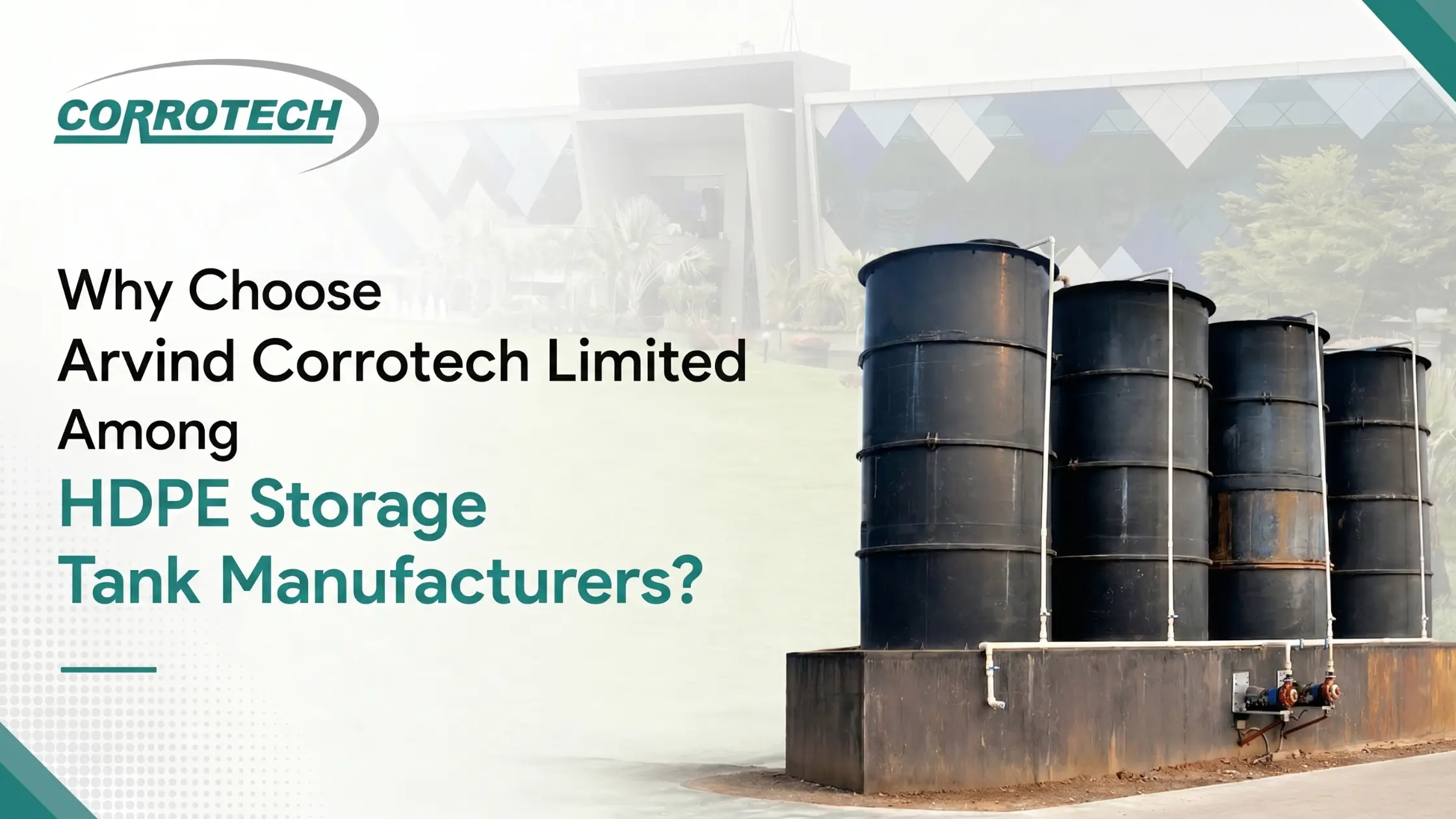
When you’re setting up a galvanizing plant or chemical processing facility, picking the right HDPE storage tank manufacturer is honestly one of the most important calls you’ll make. The quality of your storage setup directly affects how smoothly your operations run, whether you stay on the right side of safety regulations, and how much you end up spending over the long haul.
At Arvind Corrotech Limited, we’ve been doing this since 2015; that’s 10+ years of experience, and over time, we’ve become the go-to supplier for over 100 major industrial clients, including names like L&T, Welspun, Polycab, Jindal, and Tata Steel. Our HDPE storage tanks are built using advanced butt fusion welding technology, and they’re designed to last anywhere from 20 to 30 years with very little maintenance needed along the way.
So what actually makes us different from other HDPE tank manufacturers? Let’s walk through it.
1. Superior Manufacturing Process
How a tank is built makes all the difference. A lot of manufacturers rely on standard welding methods that, over time, can develop weak spots and become a leak risk.
We use butt fusion welding, a more advanced joining technique that creates seams as strong as the tank material itself. No weak joints, no compromised points. It’s considered the gold standard in premium HDPE tank fabrication, and here’s what that means in practice:
- 100% leak-proof performance: No compromised joints or seams
- CNC program consistency: Automated controls for uniform quality on every tank
- Long-term structural integrity: Weld strength matches the tank material itself
- Reduced maintenance costs: Fewer repairs and replacements over the tank’s lifetime
On top of that, everything we do is backed by DVS (German quality standards), so each tank is verified against international specs before it leaves our facility.
2. Certified Quality & International Standards Compliance
In industrial environments, safety isn’t something you can cut corners on. Proper certifications protect your facility, your people, and your reputation.
We hold multiple international certifications:
- ISO 9001:2015: Quality management systems
- ISO 14001: Environmental management systems
- DVS Standards: German welding and fabrication standards
- BIS Compliance: Bureau of Indian Standards certification
These aren’t just certificates on a wall. They represent real testing, thorough process audits, and a genuine commitment to improvement. Every HDPE tank we produce meets these standards, which means you can trust what you’re getting.
3. Proven Durability: 20-30 Year Lifespan with Minimal Maintenance
HDPE storage tanks take a beating from UV exposure, temperature swings, and chemical stress. Cheaper tanks tend to give up within 5–10 years, leaving you with costly replacements and unexpected downtime.
Our tanks are built to go the distance:
- Chemical resistance: Withstands harsh acids, alkalis, and industrial chemicals
- UV stabilization: Designed for outdoor use in hot climates without deterioration
- Temperature range: Operates reliably from 20°C to +70°C
- Impact strength: Handles rough handling, transportation, and operational stress
- 20-30 year expected lifespan: Provides genuine long-term value
That kind of longevity means fewer replacement cycles, less downtime, and a significantly lower total cost of ownership over 30 years compared to what most competitors offer.
4. Complete Customisation Capabilities
No two industrial facilities are built the same way, and your storage solution shouldn’t be either. We design tanks using RITA software (Rochling Integrated Tank Building Assistant) along with custom engineering to give you exactly what your operation needs.
We manufacture:
- Vertical storage tanks: For space-efficient bulk storage. Horizontal tanks: For low-profile installations or mobile
- applications
- Square storage tanks: For corner installations and unique layouts
- Custom shapes and sizes: From 500 liters to 100,000+ liters capacity
- Specialized attachments: Level indicators, overflow alarms, mixing compartments, lifting hooks
Whether you need a single tank or an entire multi-tank system with specialized fittings, our engineering team figures out what works best for your facility.
5. Trusted by India’s Largest Industrial Names
Talk is easy; results speak louder. Take a look at who’s already working with us:
- Steel & Galvanizing: L&T, Tata Steel, Polycab, Jindal Quality Tubular, Karamtara engineering, KEC international
- Chemical & Manufacturing: ION Exchange, Gravita India, Membrane technologies, Arvind Envisol,
- International Clients: Saudi Aramco, Sonatrach, Al-Babtain Power & Telecom, MAN Energy Solutions
These aren’t small regional buyers; they’re multinational corporations with demanding quality expectations. The fact that they keep coming back says more than any brochure could.
When a company like Tata Steel or L&T puts their trust in you, it’s because the performance checks out and the certifications are real.
6. Complete After-Sales Support & Service
Buying a tank is the start of the relationship, not the end of it. If something goes wrong down the line and there’s no support in sight, that’s a serious problem.
We’re there for the long haul:
- Installation & commissioning support: Proper setup ensures optimal performance
- Annual maintenance contracts: Preventive care extends tank lifespan
- Round-the-clock technical assistance: Support when you need it
- Spare parts supply: Genuine components for repairs and upgrades
- Training and development: Your team learns proper tank management
- Post-commissioning support: Ongoing monitoring and adjustments
- Plant upgrading services: Modernize existing installations
This kind of end-to-end support reduces operational risk and keeps your tanks performing the way they should throughout their full 20–30 year life.
7. Realistic Pricing Without Compromise on Quality
Cost is always part of the conversation, but “cheapest” almost never means “best value.” Budget manufacturers typically cut corners somewhere, such as materials, welding quality, and engineering, to hit a lower price point.
We try to strike the right balance:
- Competitive pricing: Not the cheapest, but fair for what you’re getting
- No hidden costs: Transparent pricing includes engineering, manufacturing, and delivery
- Longer lifespan = lower TCO: A 20-30 year tank financially outperforms a 5-year budget tank
- Reduced maintenance expenses: Quality welds and materials mean fewer repairs
- Customization included: You pay for exactly what you need, nothing more
A little extra upfront tends to translate into meaningful savings over the life of the tank.
Why HDPE Storage Tanks Over Alternatives?
HDPE tanks often get compared to polypropylene (PP), FRP, and steel options. Here’s the honest breakdown:
HDPE vs. Steel Tanks:
- No rusting or corrosion
- Lighter weight, easier to install and move
- Lower maintenance requirements
- Safer to work with, no sharp edges, no coating flakes
HDPE vs. Polypropylene Tanks:
- Better impact resistance
- Lower cost for equivalent capacity
- Suitable for a broader chemical range
- Easier to repair minor damage
HDPE vs. FRP Tanks:
- Better for high-impact environments
- Lower cost
- Easier to customize
- Simpler installation process
For acid storage, chemical processing, and water treatment applications, HDPE consistently delivers the best balance of durability, cost, and performance.
What Makes Us Different?
10+ Years of Industrial Experience
Since 2015, we’ve built a solid reputation as a reliable partner for some of India’s largest industrial manufacturers. That experience shows up in better engineering, quicker problem-solving, and quality you can count on.
Client-First Engineering
We don’t push “standard” tanks and expect you to adapt. Our team designs solutions around your specific layout, chemical requirements, and operational needs.
Quality That Lasts
The 20-30 year lifespan isn’t a marketing line, it’s what you get when you combine butt fusion welding, certified materials, and proven engineering. Competitors using standard welding often see tanks fail well before the decade mark.
Complete Support System
From the first consultation through years of operation, we’re with you, installation, training, maintenance contracts, spare parts, and technical support whenever you need it.
Transparent Pricing
No surprises, no hidden add-ons. You know what you’re paying for and why. Our pricing reflects real value, not budget shortcuts.
The Bottom Line
Choosing an HDPE storage tank manufacturer is really choosing a 20–30 year partner for something that sits at the core of your industrial operation. The wrong choice can mean ongoing maintenance headaches, unexpected failures, and costs that quietly pile up over time.
At Arvind Corrotech Limited, we’ve earned the trust of some of the biggest names in the Indian industry by consistently delivering quality, engineered solutions, backed by international certifications and genuine long-term support.
If your facility needs reliable HDPE storage tanks built specifically for your requirements and designed to last two decades or more, we think we’re worth a serious look.
Frequently Asked Questions
1. How long do HDPE storage tanks typically last?
Arvind Corrotech’s HDPE tanks are engineered for a realistic lifespan of 20-30 years with proper maintenance. This exceeds most competitor products and represents genuine long-term value.
2. Can HDPE tanks handle harsh chemicals?
Yes. HDPE naturally resists a wide range of aggressive chemicals including hydrochloric acid (HCl), sulfuric acid, alkalis, solvents, and industrial additives. Tank specifications should be confirmed for your specific chemical.
3. Can tanks be customized for specific applications?
Completely. Using RITA software and custom engineering, Arvind Corrotech designs tanks in virtually any size, shape, and capacity with specialized attachments like level indicators, overflow alarms, or mixing compartments.
4. What certifications do your tanks carry?
ISO 9001:2015, ISO 14001, DVS standards (German quality), and BIS compliance. These certifications verify quality manufacturing, environmental responsibility, and safety standards.
5. Are international certifications necessary?
For regulatory compliance and insurance purposes, yes. International certifications (ISO, DVS) ensure your tank meets global safety standards and provides legal protection for your facility.
6. How long does delivery and installation take?
Timelines vary based on tank specifications and customization requirements. Contact Arvind Corrotech for project-specific delivery estimates and installation schedules.
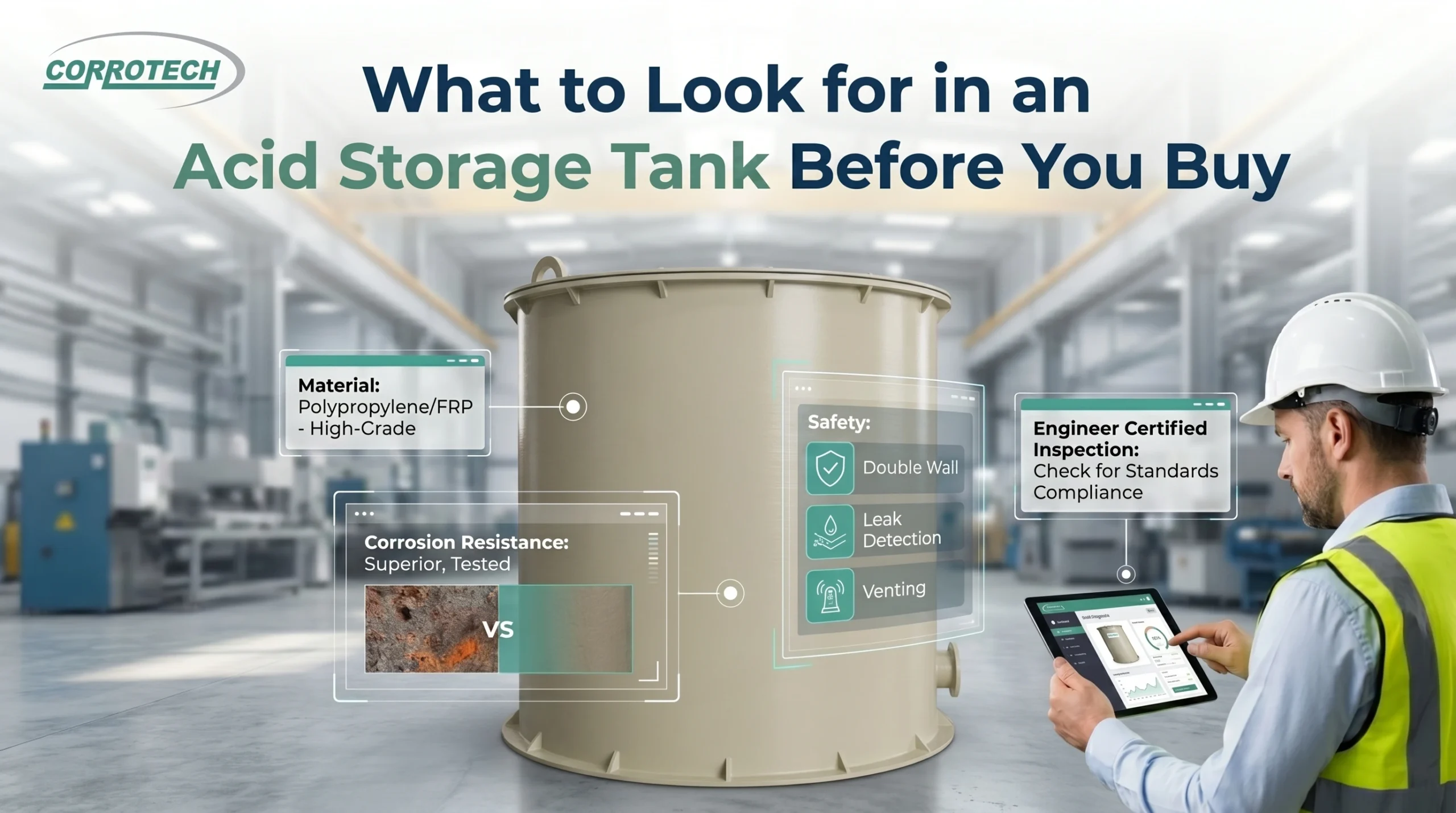
Choosing the wrong acid storage tank is more than just a purchasing mistake. It can lead to chemical leaks, equipment failure, safety hazards, environmental violations, and costly downtime on the production floor. For industries such as manufacturing, chemical processing, and water treatment, selecting the right tank requires careful evaluation beyond just the initial purchase cost.
This guide will help you understand the key factors to consider before finalizing your decision. From chemical compatibility and structural design to regulatory compliance and long-term operating costs, each aspect plays an important role in ensuring safe, reliable, and cost-effective storage.
What Exactly Is an Acid Storage Tank?
An non metalic acid storage tank is a specially built container that’s designed to safely hold corrosive acids, sulfuric acid, hydrochloric acid, nitric acid, phosphoric acid, and hydrofluoric acid in industrial quantities. It’s different from your typical chemical tank because it has to meet really tough standards for materials. The tank must be designed with durability and safety in mind. It should be capable of withstanding the highly reactive nature of acids, temperature variations, and continuous long-term operation without deterioration or failure.
These tanks are widely used across various industries, including :
- Chemical manufacturing and processing
- Water treatment and pH correction systems
- Metal pickling and surface treatment
- Fertilizer and agrochemical production
- Pharmaceutical manufacturing
- Oil and gas refining
Why This Decision Matters So Much
When an acid storage tank fails or isn’t compatible with what you’re storing, the problems go way beyond just the tank itself:
- Chemical leaks can pollute soil, contaminate groundwater, and damage everything around your facility, also a financial loss
- Tank failure can is serious and hazardous problem for your workers and the surrounding plant equipment
- Regulatory non-compliance (EPA, OSHA, IS standards) means heavy fines, plant shutdowns, and legal headaches
- Premature corrosion eats away at your bottom line through constant repairs and forces you to replace the tank way too early
The U.S. Environmental Protection Agency (EPA) has actually found that improper chemical storage is one of the biggest reasons hazardous materials get released at industrial sites. Getting your tank specification right from day one keeps your operations safe, protects your team, and keeps your compliance record clean.
Key Factors You Should Evaluate Before Buying an Acid Storage Tank
1. Material of Construction: The Most Critical Decision
Here’s the reality: your tank material has to work with the specific acid you’re storing. And we’re talking about not just the type of acid, but also how concentrated it is, what temperature it’s at, and what else might be mixed in with it.
Common Materials for Acid Storage Tanks:
| Material | Best Suited For | Key Advantage | Limitation |
| High-Density Polyethylene (HDPE) | Hydrochloric acid, dilute sulfuric acid | Lightweight, corrosion-resistant, cost-effective | Not suited for concentrated oxidizing acids |
| Polypropylene (PP) | Dilute acids, mild oxidizers | Good thermal resistance up to 80°C | Limited structural strength at high temperatures |
| Cross-Linked Polyethylene (XLPE / PVDF) | Hydrofluoric acid, aggressive acids, Nitric acid (dilute), phosphoric acid | Superior chemical resistance and stress crack resistance | Higher upfront cost |
Common Materials for Acid Storage Tanks:
Here’s the thing to remember: always use a chemical resistance chart (your material supplier, like IPEX or Ashland Chemical, can provide these) to double-check that your chosen material will work. What handles 10% sulfuric acid just fine might completely fail with 98% concentration.
2. Tank Capacity and Sizing
Get the size wrong, and you’ve got problems on both ends. Buy too big, and you’re throwing money away on capacity you’ll never use. Buy too small, and you’re stuck with bottlenecks and constantly having to refill.
Think about these things when sizing:
- What you’re using daily and what your peak demands are
- Whether you’re running batches or continuous flow
- How long does it take to get new acid from your supplier
- How much space do you actually have, and what secondary containment needs do you have
3. Design Standards and Certifications
Your acid storage tank should meet real, recognized engineering standards. When you’re talking to suppliers, make sure they can prove their tanks conform to the following:
- IS 7634 / BIS Standards (India): for polymer tanks in chemical applications
- DVS 2205 → Design calculations for thermoplastic tanks and equipment
- ASTM D1998: Standard specification for polyethylene upright storage tanks
- BS EN 13121: GRP/FRP tanks and vessels for above-ground use
- UL 142: Standard for steel aboveground tanks for flammable and combustible liquids
- OSHA 29 CFR 1910.119: Process safety management of highly hazardous chemicals
When you’re checking out suppliers, ask this directly: “Which standards is this tank certified for, and do you have third-party test certificates to back that up?”
4. Wall Thickness and Structural Integrity
Thin-walled tanks might technically meet your capacity needs on paper, but they can give out when you put them under real pressure, whether that’s the weight of dense acids, temperature changes, or a knock from equipment.
Look closely at:
- What the design standard says about minimum wall thickness (for HDPE at typical industrial sizes, you’re usually looking at 6–12 mm)
- How the ribs are arranged to reinforce the tank, and the radius where the wall meets the bottom
- Whether it’s protected from UV if it’s sitting outside
- Whether it can handle wind and earthquakes, if that applies to your location
- The difference between flat-bottom and sloped-bottom designs (sloped bottoms drain completely and clean more easily)
For bigger tanks (over 10,000 liters), definitely ask the vendor for engineering drawings and proof of hydrostatic test results.
5. Fittings, Nozzles, and Connection Points
Here’s a hard truth: your acid storage tank is only as safe as its weakest connection. Fittings that aren’t right are a major cause of leaks.
Pay attention to these fitting details:
- Material compatibility: Every fitting, flange, gasket, and bolt needs to handle the acid as well as the tank does (or better). PVDF, PTFE-lined, and polypropylene fittings show up a lot in acid work.
- Inlet and outlet positioning: Think about whether you want filling from the top (usually the safest) or draining from the bottom. Check if you need anti-siphon devices.
- Vent design: Acid fumes need to go somewhere safely. Closed venting stops vapors from escaping into your workspace.
- Level gauges and instrumentation: Chemical-resistant sight glasses or float type cut down on how much manual checking you need to do.
- Manhole or inspection access: You’ll need a way to get inside for cleaning, checking things out, and maintenance work.
6. Secondary Containment
Most countries’ regulations, plus just common sense about safety, say your acid storage tank has to be inside a secondary containment system. This backup container needs to be able to hold 110% of your tank’s volume (or if you’ve got multiple tanks, the biggest one).
You’ve got options for secondary containment:
- Integral double-wall tanks (built in at the factory)
- Containment berms or dikes (concrete or HDPE-lined)
- Containment pallets for smaller IBC/drum-scale acid storage
One important thing: whatever secondary containment you use also needs to be compatible with the acid you’re storing.
7. Temperature and Pressure Ratings
Acids don’t act the same way at all temperatures. Warm them up, and reactivity goes up, vapor pressure climbs, and the material gets stressed more.
Make sure you confirm:
- The highest temperature your material can handle during normal, continuous operation (HDPE, for example, usually tops out around 60°C for steady use)
- What temperature spikes or surges can it tolerate
- Whether your acid gets hot when you dilute it or mix it with something (exothermic reactions)
If your tank’s sitting outside in a place with big seasonal temperature swings, you might want UV-stabilized materials and insulation jackets to keep things stable.
8. Smart Monitoring and IoT Compatibility
A lot of newer acid storage setups want real-time information about what’s happening in the tank. When you’re looking at a tank, think about whether it can handle:
- IoT-integrated level sensors: for watching levels from anywhere and getting alerts if something’s wrong
- Leak detection systems: sensors in your secondary containment that sound the alarm before a spill spreads
- Predictive maintenance compatibility: data tracking for temperature, pressure, and how often you’re filling up
If you get IoT-ready fittings and sensor ports when you buy the tank, it’s way cheaper than trying to add them later on.
9. Vendor Technical Support and After-Sales Service
Buying a tank is a long-term commitment for your operation – this isn’t just a quick transaction. Evaluate your supplier on:
- Engineering support: Can they do calculations for your setup, provide installation drawings, and give you advice based on your application?
- Local service availability: Can you actually get spare parts and repair help in your area if you need it?
- Warranty terms: What do they actually cover, for how long, and under what conditions?
- Reference installations: Can they show you examples or give you contacts at other facilities in your industry?
- Lead time: Custom tanks can take 8-16 weeks. Make sure that it lines up with when you actually need it.
10. Total Cost of Ownership (TCO), Not Just Purchase Price
The sticker price is only part of the story. Here’s what actually affects your wallet over the tank’s entire life:
| Cost Factor | Impact |
| Purchase price | What you pay upfront |
| Installation and civil works | Foundations, piping, secondary containment setup |
| Maintenance and inspection frequency | Labor and materials to keep it working |
| Liner or fitting replacement | How often and how much these components cost |
| Downtime risk | What production loss costs you if the tank fails |
| Regulatory compliance costs | Permits, audits, paperwork |
| End-of-life disposal | Recycling or taking it out of service |
Here’s the thing: a tank with better specs and longer life often costs you less overall than a cheaper tank that needs replacing in 5–7 years.
11. Industry-Specific Requirements
Different industries have their own additional rules beyond the standard chemical storage guidelines:
- Pharmaceutical / food-grade applications: You need FDA/FSSAI-compliant materials, smooth inside surfaces, and nothing that could be contaminated with metal particles
- Water treatment facilities: Dosing tanks need precise, accurate fittings for small volumes
- Fertilizer production: Big outdoor tanks need construction that resists UV and can handle wind loads
- Metal finishing acid pickling tanks often need heating capability and systems to manage fumes
Make sure your supplier actually understands what you’re using the tank for, not just the specifications on the paperwork.
Common Mistakes Buyers Make When Selecting an Acid Storage Tank
Watch out for these pitfalls; they trip up a lot of purchasing decisions:
- Picking a material just because it’s the cheapest option, without checking if it actually works with your acid
- Underestimating what you’ll need in the future, then having to upgrade constantly
- Not paying enough attention to the fittings and accessories, even when the tank itself is good
- Skipping secondary containment or not treating it seriously creates real regulatory risk
- Going with a supplier that doesn’t have local support is a big problem when you need maintenance or emergency help
- Taking a supplier’s word for compliance instead of asking for actual test certificates and documentation
Acid Storage Tank Maintenance Best Practices
Keep up with maintenance, and your tank will last longer and stay safe.
- Visual inspection every 3–6 months: Look for surface crazing, color changes, or leaks at the fittings
- Pressure/hydrostatic test annually: Especially if your tank is doing critical work
- Fitting and gasket replacement every 2–3 years: Changing these before they fail stops emergencies
- Secondary containment inspection: Check for acid residue that might show small leaks
- Level sensor calibration: Test accuracy every quarter
- Vent system inspection: Make sure your scrubber media isn’t used up
Write everything down: inspections, maintenance, and repairs. You’ll need these records for regulators.
FAQS
1. What material is best for an acid storage tank?
The best material depends on the type and concentration of acid being stored. Common materials include PP, HDPE, FRP, PP FRP, and rubber-lined steel. The right material helps prevent corrosion, leakage, and chemical reactions inside the tank.
2. Why is chemical compatibility important in acid storage tanks?
Chemical compatibility is important because not every tank material can safely store every acid. Using the wrong material may cause corrosion, contamination, tank failure, or safety risks. Always check compatibility charts before buying a tank.
3. Which safety features should an acid storage tank have?
An acid storage tank should include safety features like secondary containment, proper venting systems, leak protection, pressure relief valves, and corrosion-resistant fittings. These features help reduce environmental and operational risks.
4. How do I choose the right size acid storage tank?
Tank size depends on chemical volume, daily usage, future expansion, and available installation space. Choosing the wrong size can create storage problems, operational delays, or unnecessary costs later.
5. How important is maintenance when buying an acid storage tank?
Regular inspection and maintenance are essential for long-term tank performance and safety. Buyers should check tank durability, welding quality, fittings, vent systems, and maintenance requirements before purchase.