
Tag: Hot dip galvanizing process
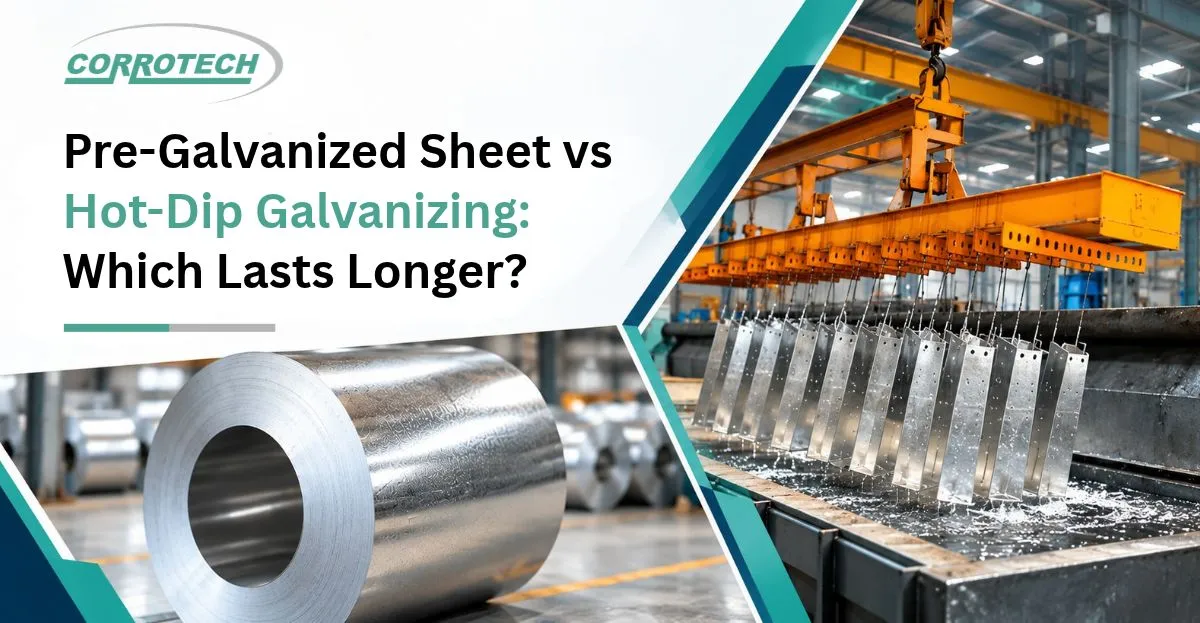
Steel is strong, affordable and versatile, but left unprotected it rusts. Zinc coating is the most trusted defence, and two methods dominate the market: pre-galvanized sheet and hot-dip galvanizing. Both use zinc, yet they perform very differently over time.
If you are specifying steel for a warehouse, transmission tower, plant structure or fabricated component, the choice affects maintenance costs for decades. This guide compares the two methods on coating thickness, service life, edge protection and cost, so you can pick the right one.
What Is Pre-Galvanized Sheet?
Pre-galvanized sheet, also called continuous-line galvanized or Sendzimir-galvanized steel, is coated at the steel mill. A coil of cold-rolled steel passes through a bath of molten zinc, then through air knives that wipe off excess metal. The coil is cooled, cut and shipped.
The process is fast and suits high volumes of flat sheet. Coating weight is usually specified in grams per square metre, commonly between 100 and 275 g/m² in total. That works out to roughly 7 to 20 microns of zinc per side.
Because the coating is applied before the sheet is cut, punched, bent or welded, fabrication exposes bare steel along every cut edge and weld.
What Is Hot-Dip Galvanizing?
Hot-dip galvanizing is applied after fabrication. Finished items such as beams, angles, pipes, fasteners, tanks and frames are cleaned, then fully immersed in molten zinc at around 450°C. The zinc reacts with the steel and forms a series of zinc-iron alloy layers, topped with a layer of pure zinc.
This metallurgical bond is the key difference. The coating is part of the surface rather than a film sitting on it. Every surface, including internal cavities, corners and edges, is coated in one operation.
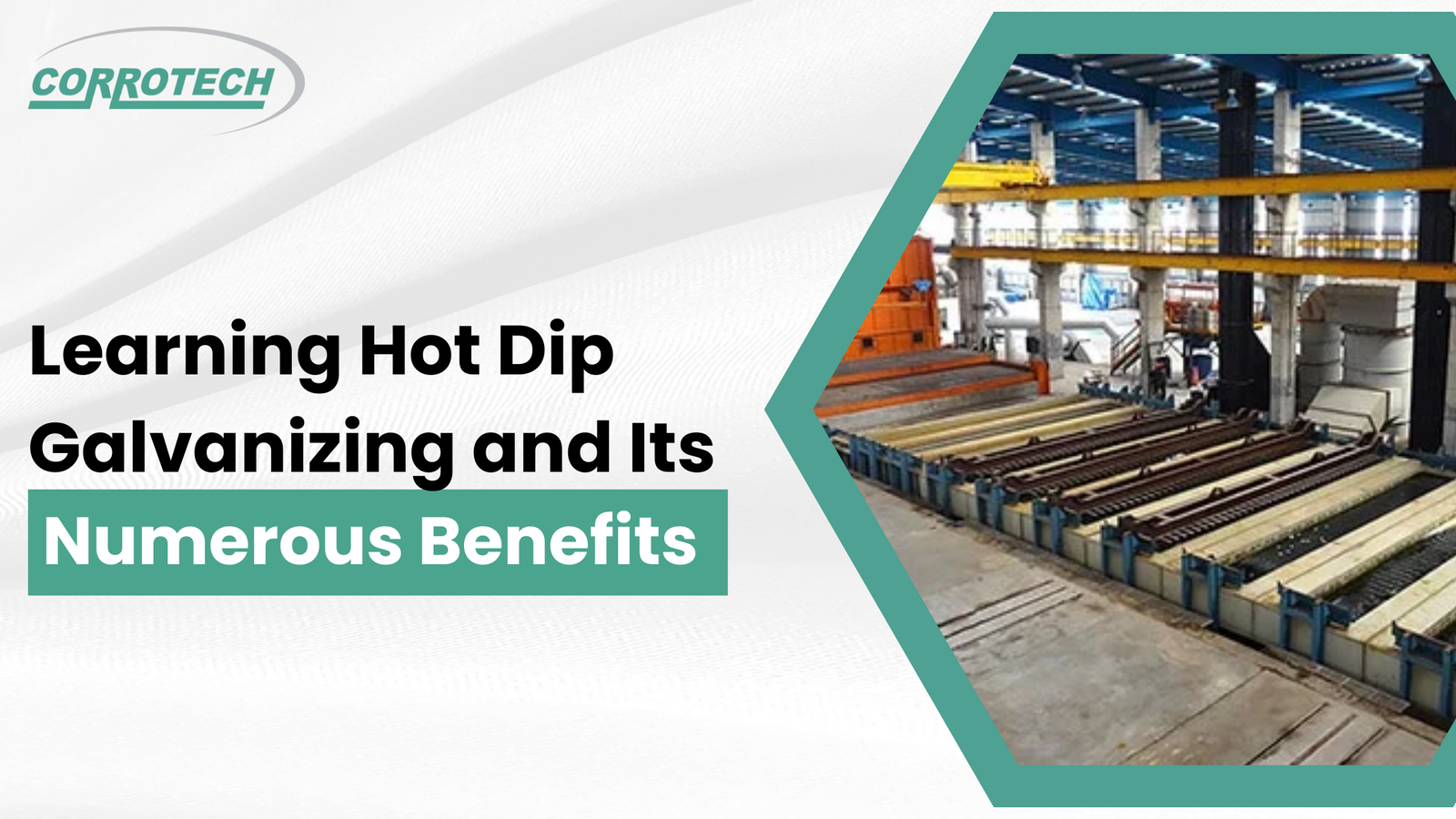
Work of this kind is carried out in a dedicated hot dip galvanizing plant, where each stage is carefully controlled to produce a consistent, uniform coating.
Coating Thickness: The Biggest Factor in Service Life
Zinc protects steel by acting as a physical barrier and by corroding sacrificially. Because zinc corrodes at a slow, predictable rate, service life depends mainly on how much zinc is on the surface.
- Pre-galvanized sheet: about 7 to 20 microns per side
- Hot-dip galvanized steel: typically 45 to 85 microns or more, depending on steel thickness (as per standards such as ISO 1461)
Hot-dip coatings are commonly four to ten times thicker. In the same environment, a thicker coating takes far longer to be consumed, and that is why hot-dip galvanized steel outlasts thinner coatings.
Service Life: How Long Does Each Last?
Actual life depends on the environment. Zinc corrodes faster in coastal air, chemical atmospheres and areas with heavy industrial pollution than in dry, rural or indoor conditions.
Pre-galvanized sheet generally performs well indoors or in mild, dry conditions, Outdoors, and especially in humid, coastal or polluted air, the thin coating can wear through much sooner, often within a few years to a decade.
Hot-dip galvanized steel commonly delivers 50 years or more in rural and mild environments. In harsh industrial or marine conditions, it often still provides 20 to 25 years or more of maintenance-free protection.
These are indicative ranges. Coating weight, local climate and the quality of the galvanizing process all affect the result.
Edge and Weld Protection
This is where the two methods differ most in the field.
With pre-galvanized sheet, cutting, drilling and welding remove or damage the coating locally. Rust often begins at these exposed edges and spreads under the coating. Touch-up paint or zinc-rich repair coatings can help, but they are a patch rather than a metallurgical bond.
With hot-dip galvanizing, the whole fabricated item is coated, so edges, corners, weld seams and hollow sections are protected. Zinc also gives limited protection to small scratches and cut areas nearby by corroding sacrificially, which slows rust creep.
Toughness and Damage Resistance
Because the hot-dip coating is bonded to the steel through alloy layers, it resists abrasion, impact and rough handling well. This matters during transport, erection and installation, where structural steel takes a lot of knocks.
Pre-galvanized coatings are thin and ductile. They tolerate forming, but they are easier to scratch, and the coating can crack at tight bends or stressed areas.
Cost: Upfront vs Lifecycle
Pre-galvanized sheet is generally cheaper upfront and is easy to source. For indoor ducting, light enclosures, roofing in mild climates or short-life applications, it is often the right economic choice.
Hot-dip galvanizing costs more initially, but it usually wins on lifecycle cost. Once installed, it needs little or no maintenance for decades, with no repainting, recoating or early replacement. For structures that are hard to access, or where downtime is expensive, this saving is significant.
When comparing options, ask what the total cost will be over the expected life of the asset, not just the purchase price
Which Should You Choose?
| Factor | Pre-Galvanized Sheet | Hot-Dip Galvanizing |
| Coating thickness | About 7-20 microns per side | Typically 45-85+ microns |
| Coating applied | Before fabrication | After fabrication |
| Edge and weld protection | Limited | Complete |
| Typical outdoor life | Shorter | 50+ years in mild conditions |
| Upfront cost | Lower | Higher |
| Lifecycle cost | Higher in harsh environments | Lower |
| Best for | Indoor use, light sheet work | Structures, outdoor and industrial use |
Choose pre-galvanized sheet for indoor, low-exposure, light-gauge applications where the budget is tight and the service life is modest.
Choose hot-dip galvanizing for outdoor structures, industrial facilities, coastal locations, infrastructure and anywhere long life and low maintenance matter.
What Goes Into a Quality Hot-Dip Coating
A durable coating depends on the plant as much as the process. Quality results come from a well-designed line with reliable equipment.
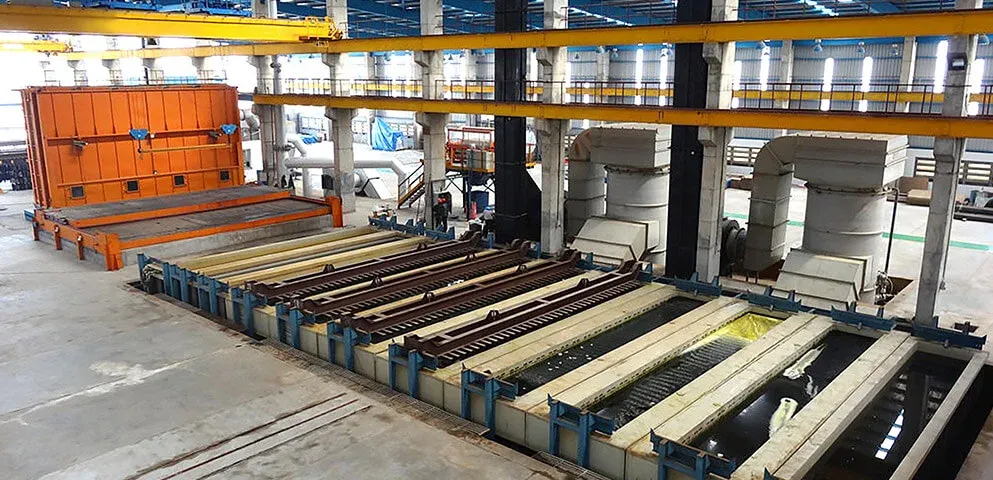
The galvanizing furnace is at the centre of the plant. It holds the zinc bath at a stable temperature, and even heating keeps coating thickness and adhesion consistent from one batch to the next. Efficient, well-built furnaces also reduce fuel use and zinc losses.
Surface preparation is just as critical. Steel must be degreased, pickled in acid and fluxed before it enters the zinc. This stage relies on properly engineered Process Tanks & chemical storage tanks, built from acid-resistant materials so they handle pickling and flux solutions safely for years without leakage or contamination of the process.
If you plan to set up or upgrade a facility, working with an experienced galvanizing plant manufacturer helps ensure the furnace, tanks, handling systems and layout are designed around your production volume and product mix. The right partner will also advise on energy efficiency, safety and environmental compliance.
Final Verdict
So, which lasts longer? Hot-dip galvanizing, and by a wide margin. Its thicker, metallurgically bonded coating, complete coverage of edges and welds, and proven performance in tough environments give it a service life measured in decades.
Pre-galvanized sheet still has an important place. For light, sheltered or short-term uses it is economical and perfectly adequate. The mistake is using it where conditions demand more.
Match the coating to the environment, the expected life and the true lifecycle cost, and your steel will stay protected for years to come.
Frequently Asked Questions
- Does pre-galvanized sheet rust faster than hot-dip galvanized steel?
Yes, generally. Pre-galvanized sheet has a much thinner zinc coating, so it corrodes through faster, especially outdoors or in humid and coastal conditions. In dry, indoor settings the difference is much less noticeable. - Can pre-galvanized sheet be used outdoors?
It can, but it is better suited to sheltered or mild environments. For long-term outdoor exposure, especially in industrial or coastal areas, hot-dip galvanizing offers far better protection and a longer service life. - Why does cutting or welding pre-galvanized sheet reduce its corrosion resistance?
Because the coating is applied before fabrication, any cutting, drilling or welding exposes bare steel at that point. Hot-dip galvanizing is applied after fabrication, so edges, welds and corners are fully coated and protected. - Is hot-dip galvanizing worth the extra upfront cost?
In most outdoor, industrial or structural applications, yes. The higher initial cost is usually offset by decades of maintenance-free service, with no repainting or early replacement needed, which lowers the total lifecycle cost.s
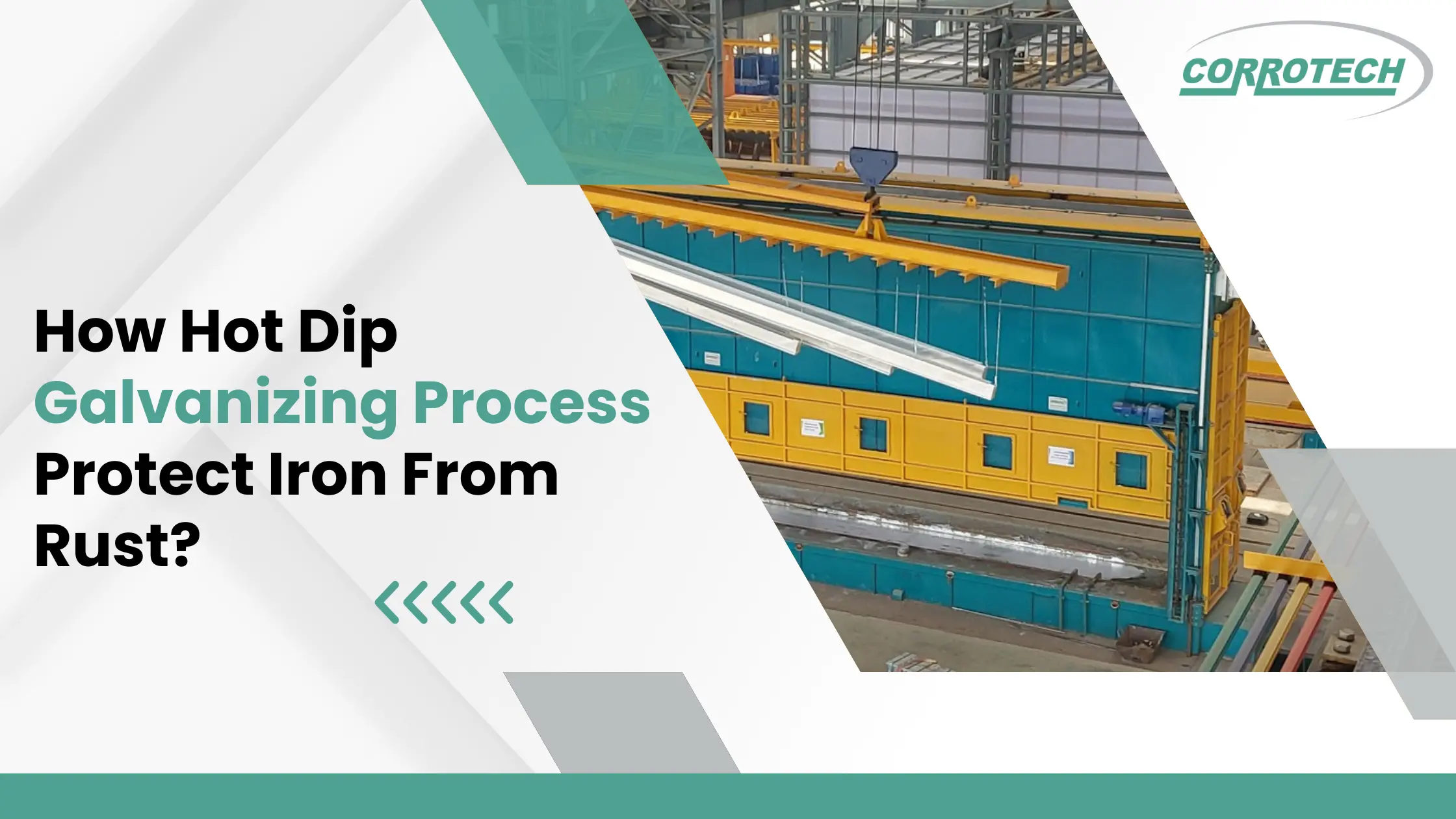
Over the years technology and innovation have helped a wide range of industries in furthering their evolution. Even the process of galvanization has also been benefitted from the emergence of technology. Corrosion technology is no more the same, it used to be in the past. Continued innovation is paving the way for new processes and methods of galvanization.
In this short and meticulous blog, we are going to focus on galvanization, its benefits and advantages, and a host of other significant issues.
Learning about the Galvanization
 Dear Readers, at the outset, let’s understand the term galvanization in simple words before we take a deep dive into the all-important subject.
Rust is the biggest opponent of iron and other metals. Overexposure of metallic parts to inclement weather, scorching heat, saline water, etc. leads to corrosion. Corrosion impacts the life of the metal.
Galvanization is one most reliable methods to prevent iron and steel metal from corrosion. There are various types of methods available for protecting the metal from corrosion.
How does it Happen
Under the process of galvanization, a thin layer of zinc coating develops on the base metal, when it is dipped in the lava of molten zinc. The zinc layer develops on the metal during the process. It helps prevent metal, like iron and steel from corrosion through a protected shield. This layer of zinc though as thin as the thickness of a photocopy paper helps the metal withstand inclement weather.
The hot dip galvanizing process generates white fumes when steel is dipped in the molten zinc. The fumes that emanate are extremely hazardous due to the presence of chlorine and suspended ash particles. If inhaled, it may also be considered harmful for health. Also, they deteriorate the overhead cranes and the shed life. Hence, it becomes apparent to establish a system for fume abatement and discharge. This entire system is known as Zinc Fume Extraction System,
Hot dip galvanizing is one of the most sought-after methods for the galvanization process of metal across industries and geography.
Galvanizing Benefits
Galvanizing is all-around. It wouldn’t be an exaggeration if we say the process has become an integral part of our life. Life can’t be imagined without galvanization. In this section, we are going to talk about the core of this blog.
Industrial use
Owing to the amazing benefits of galvanization, it has found usage in a wide range of industries. Industries like automobile, Infrastructure development, wind energy, transport- shipping, railways, airplane, etc., and sports to name a few are using the innovation for their benefits. Numerous strictures across the globe are using galvanized steel for its amazing properties. These types of metal have the properties to counter and withstand inclement weather, resulting in optimized durability. Anti-corrosion properties of the zinc layer are the biggest instrument of the galvanization process.
Join Hands with Arvind Corrotech
Arvind Corrotech is an industry leader offering full-spectrum galvanization solutions. Our quality-driven product range includes Turnkey Hot Dip Galvanizing Plants, Pulse Fired High-Velocity Furnace, Process Tanks, Chemical Storage Tanks, and Pollution Control Equipment.
If you are on the lookout for anything related to galvanization, then end your search with Arvind Corrotech.
Let’s connect for a mutually beneficial collaboration.
ore making a deep dive into the important subject, its definition assumes significance here. Learning would be much simpler then. The blog is going to focus on the definition and benefits of the process that has been transforming our day-to-day lives. Many of us may not be aware. However, we all come across galvanized items almost every day.
Learning about the Term
Hence, what is this process all about? Why can’t we make an endeavor to tell our readers and those associated with the industry in layman’s language? Galvanizing is the process of applying a protective zinc coating or layer to steel or iron. The objective behind the process is to protect the iron metal from corrosion. The process makes the metal rust-proof!
Since the hot-dip galvanizing process offers numerous benefits, it has been used in numerous industrial applications. Its versatility makes it favourite among many industries using an iron-on large scale for a wide range of processes.
Why only Zinc?
Why do most of the galvanizing processes rely on zinc across the globe? This question assumes significance in the context of this significant article. There are obvious reasons behind choosing zinc over others. Here are a few features that make the zinc stand out from the rest:
- The corrosion of zinc is very slow
- Durable
- Provides cathodic protection
- Even corners and smaller areas get protected
Machinery and Tools for the Process
The process of galvanizing is carried out through tried and tested machinery and tools. Industry experts are of the opinion that machines play an important role during the process. For example, surface treatment tanks, acid room enclosure, chemical pump, dry unit, galvanizing furnace and kettle, heat exchanger, waste gas washing system, baghouse filter, helping equipment, loading, and offloading equipment, conveyor systems, transfer car, and a host of others.
The machines’ terminology may vary from company to company. However, more or less, these are the same.
The Benefits of using Galvanization
The various reasons support the exponential rise of the use of galvanization. These are:
Affordable and reliable
- Lower cost
- Minimum maintenance
- Prolongs the life of the coated metal
- Provides exceptional resistance to mechanical wear and tear of the metal made items
- Even minor areas get protected
- Saves precious time of painting the metal made space
- Saves money needed for replacing the corroded metallic items
Industries Using Galvanization
The hot-dip galvanizing process has found application in countless industries and sectors. These include:
- Wind and solar industries
- Automotive industry
- Construction industry
- Energy industry
- Telecommunication industry
From a Galvanizing Process Perspective, the Hot Dip Galvanizing Process is Predominantly a two-step Process:
First step: Preparation of the metal/ steel for the process
Second step: Immersing the metal in a bath of molten zinc
First step: Preparation of the metal/ steel for the process
The sophisticated scientific process begins by executing the preparation of steel/ iron to accommodate zinc coating. It takes place through pickling. The metal piece goes through washing in an alkaline solution. Through this process rust, grease, and similar impurities get removed.
Second step:
The second step comprises numerous processes and stages to form the zinc coating over the metal. Subsequently, the metal is immersed in a bath of molten zinc. Also, different parameters must match.
Our focus is to increase the knowledge of readers through the basic information about the process. Readers, we will share more information about the key subject in future blogs. Keep watching this space. In the future, we are going to write on many relevant topics for readers. Here is an example, why galvanize plants?
Where to Buy the Machine?
If you are looking for a hot dip galvanizing plant, don’t forget to explore Ahmedabad, Gujarat! The leading economic hub has a few companies. These companies have the expertise to offer complete Hot dip galvanizing process solutions!